
Broken Bones in Dogs and Cats: What to Expect from Diagnosis Through Recovery
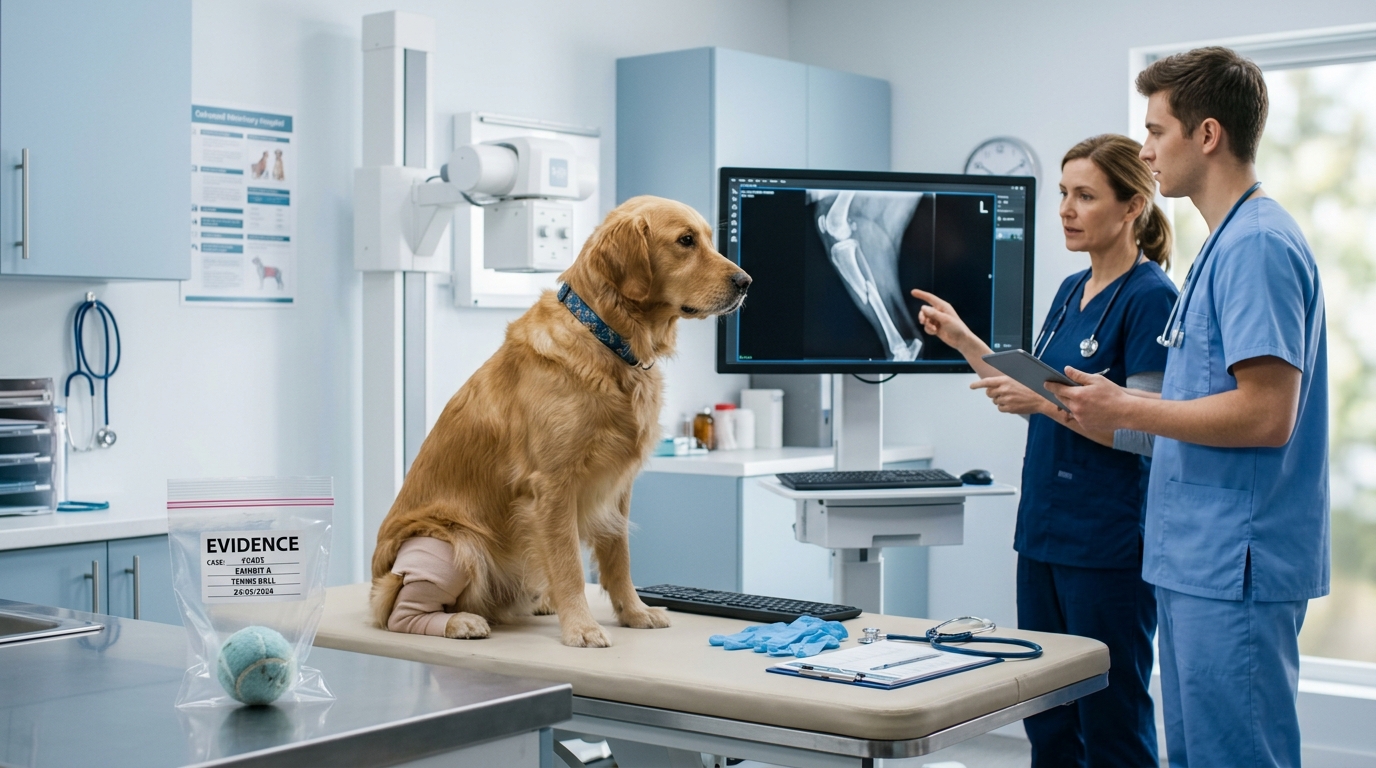
Fractures are among the more common traumatic injuries we treat, whether from a fall, a car accident, rough play, or a fight with another animal. What surprises most owners is how much variation exists in how fractures are treated — some heal with a splint and rest, others require plates and screws, and knowing which category your pet falls into starts with a clear diagnosis.
How Fractures Happen
Most fractures in dogs and cats are the result of trauma — being hit by a car, falling from a height, rough play between mismatched-size dogs, or a fight. In young puppies and kittens, growth plates are still soft and can fracture from forces that wouldn’t injure an adult bone. In older pets, underlying conditions like bone cancer or metabolic bone disease can weaken bone enough that even minor trauma causes a break.
Recognizing a Fracture
Sudden, severe lameness or a complete refusal to bear weight is the most consistent sign, sometimes accompanied by visible swelling, an abnormal angle or deformity in the limb, or pain when the area is touched. Open fractures, where bone has broken through the skin, are immediately obvious and considered more urgent because of infection risk. Closed fractures can be less visually dramatic but are just as painful and just as much in need of prompt evaluation.
What Not to Do at Home
Resist the urge to splint the leg yourself or try to realign anything — well-intentioned home splinting can cause more damage than it prevents. Keep your pet as still and calm as possible during transport, ideally in a crate or carrier for smaller pets, and avoid giving any human pain medication, many of which are toxic to dogs and cats even at seemingly small doses.
Diagnosis with In-House Imaging
A thorough physical exam combined with digital X-rays confirms the fracture and shows us exactly how complex it is — whether it’s a clean break or a comminuted fracture with multiple fragments, whether a joint is involved, and whether it’s open or closed. For complicated cases, our in-house 64-slice CT gives our surgery team a more detailed three-dimensional view before planning repair.

Splint, Cast, or Surgery
Simple, stable fractures away from a joint may heal well with external splinting or casting alone. Fractures involving a joint, multiple bone fragments, or major weight-bearing bones typically need surgical stabilization with pins, plates, or screws to heal correctly and restore full function. Our surgery department, led by Dr. Rainier Ko — one of a small number of veterinarians nationally double board-certified in both small animal surgery and neurology — handles everything from straightforward limb repairs to complex orthopedic cases.
What Recovery Looks Like
Healing time varies by the pet’s age, the bone involved, and the repair method, generally ranging from several weeks to a few months, with strict activity restriction throughout — typically crate rest or a controlled, leash-only routine until follow-up X-rays confirm the bone has healed. We’ll walk you through exactly what activity level is safe at each stage, along with pain management and any follow-up imaging needed to confirm the repair is healing as expected before your pet returns to normal activity.
When Every Minute Counts
North Springs Veterinary Emergency & Specialty Center is open 24 hours a day, 7 days a week, 365 days a year. No appointment is ever needed for an emergency — walk in any time, day or night. Our team works alongside in-house specialists in surgery, internal medicine, cardiology, and radiology, so your pet can move seamlessly from emergency stabilization to specialty care under one roof.
North Springs Veterinary Emergency & Specialty Center
10520 White Diamond Pt, Colorado Springs, CO 80908
Phone: (719) 920-4430
northspringsvrc.com
Sources
- Bone Fractures in Dogs and Cats — Merck Veterinary Manual. https://www.merckvetmanual.com/musculoskeletal-system/osteopathies-in-small-animals/bone-fractures-in-dogs-and-cats
- Fractured Limbs — American College of Veterinary Surgeons. https://www.acvs.org/small-animal/fractured-limbs/
- What to Do When Your Dog Breaks a Bone: A Vet’s Guide — Coldwater Animal Hospital. https://www.coldwateronline.com/what-to-do-dog-broken-bone-guide/
- Broken Bones in Dogs: Diagnosis and Recovery — PetMD. https://www.petmd.com/emergency/broken-bones-dogs
- Fractured Limbs in Dogs and Cats — Baywood Animal Hospital. https://www.baywoodanimaljax.com/fractured-limbs-in-dogs-and-cats