
Kennel Cough in Dogs: When That Honking Cough Needs More Than Rest
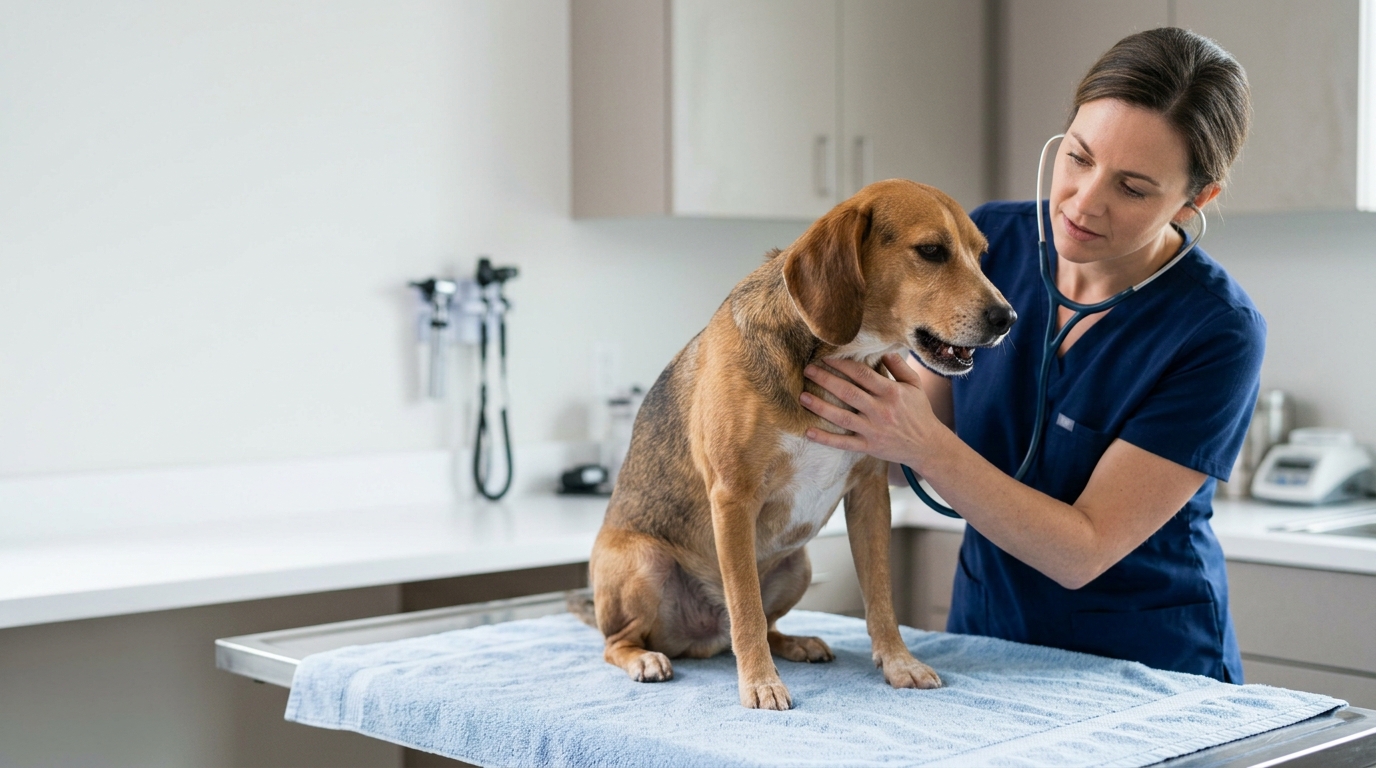
Every week we see dogs come through our doors with a cough that sounds like they’re trying to bring up a bone — a dry, honking hack that alarms owners more than it typically threatens the dog. Kennel cough, now more accurately called canine infectious respiratory disease complex (CIRDC), is usually a nuisance illness. But “usually” is doing some heavy lifting in that sentence, and knowing which cases need an emergency visit is what this article is about.
It’s Rarely Just One Germ
CIRDC isn’t caused by a single bacteria or virus — it’s a syndrome caused by a rotating cast of pathogens working alone or together, including Bordetella bronchiseptica, canine parainfluenza virus, canine adenovirus type 2, canine respiratory coronavirus, and canine influenza. That’s why the vaccine your dog receives at boarding intake reduces risk but doesn’t guarantee immunity against every possible cause of the cough. The illness spreads through airborne droplets and shared surfaces anywhere dogs gather closely — boarding facilities, daycare, dog parks, and grooming salons.
What You’ll Notice First
The hallmark sign is a dry, persistent, honking cough, sometimes triggered by pressure on the collar or excitement. Most affected dogs otherwise act fairly normal — eating, playing, and maintaining a decent energy level between coughing fits. That contrast between a dramatic-sounding cough and an otherwise bright, alert dog is actually reassuring; it’s the dogs who look genuinely sick alongside the cough who worry us most.
When a Cough Becomes an Emergency
Uncomplicated CIRDC typically resolves on its own within one to three weeks with rest and supportive care. What changes the picture is fever, lethargy, loss of appetite, or labored breathing — signs that the infection may have progressed from the upper airway into pneumonia. Puppies, senior dogs, brachycephalic breeds, and dogs with underlying heart or airway disease are more likely to develop complications and should be evaluated sooner rather than later.
How We Approach Diagnosis and Treatment
Most uncomplicated cases are diagnosed by history and physical exam alone — we don’t need to run tests on every coughing dog. When a dog is worsening, running a fever, or not improving after about a week, we’ll recommend chest X-rays to rule out pneumonia, and possibly swabs for pathogen identification if we suspect an outbreak-level cause.
Treatment for mild cases is largely supportive: rest, avoiding a neck collar in favor of a harness, and keeping your dog away from other dogs while contagious. When we suspect a bacterial component or the dog is at higher risk for complications, we’ll add antibiotics. Dogs with confirmed or suspected pneumonia need more aggressive treatment and often a hospital stay.
What Recovery Typically Looks Like
Most healthy adult dogs are clearly improving within a week and fully recovered within 10 to 14 days, though the cough itself can occasionally linger for a few weeks even after the infection has cleared. If your dog isn’t showing any improvement after a week, or seems to be getting worse rather than better, that’s your signal to come in rather than continue to wait it out.
Reducing the Risk Going Forward
Vaccination against Bordetella and canine influenza, required by most boarding and daycare facilities, meaningfully reduces both the likelihood and severity of infection even though it can’t guarantee full protection against every possible cause. Isolating a coughing dog from other dogs in the household for 14 to 21 days, along with basic hygiene around shared bowls and bedding, helps prevent it from spreading to other pets.
When Every Minute Counts
North Springs Veterinary Emergency & Specialty Center is open 24 hours a day, 7 days a week, 365 days a year. No appointment is ever needed for an emergency — walk in any time, day or night. Our team works alongside in-house specialists in surgery, internal medicine, cardiology, and radiology, so your pet can move seamlessly from emergency stabilization to specialty care under one roof.
North Springs Veterinary Emergency & Specialty Center
10520 White Diamond Pt, Colorado Springs, CO 80908
Phone: (719) 920-4430
northspringsvrc.com
Sources
- Canine infectious respiratory disease complex (Kennel cough) — American Veterinary Medical Association. https://www.avma.org/resources-tools/pet-owners/petcare/canine-infectious-respiratory-disease-complex-kennel-cough
- Kennel Cough – Respiratory System — Merck Veterinary Manual. https://www.merckvetmanual.com/respiratory-system/respiratory-diseases-of-small-animals/kennel-cough
- Kennel Cough in Dogs: Symptoms, Causes, and Treatment — PetMD. https://www.petmd.com/dog/conditions/respiratory/kennel-cough-dogs-what-are-symptoms-and-how-kennel-cough-treated
- Kennel Cough in Dogs — Veterinary Partner (VIN). https://veterinarypartner.vin.com/default.aspx?pid=19239&id=4951478
- Management of the Canine Infectious Respiratory Disease Complex (Kennel Cough) — WSAVA 2018 Congress (VIN). https://www.vin.com/apputil/content/defaultadv1.aspx?pId=22915&catId=124677&id=8896812&ind=159&objTypeID=17