
My Dog Was Hit by a Car — What to Do in the First Critical Minutes
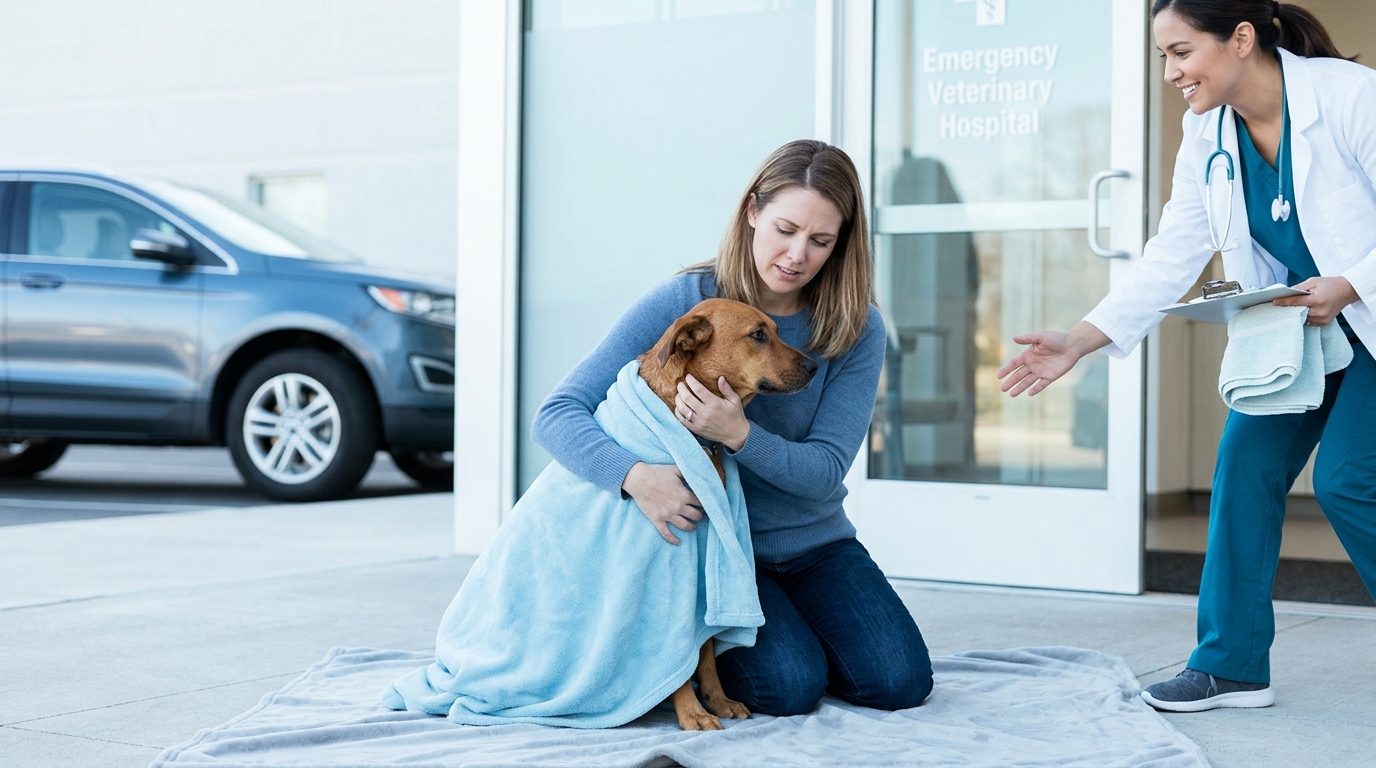
Few emergencies are more terrifying than seeing your dog struck by a vehicle. In those first moments, the instinct is to rush to your dog, scoop them up, and get to a veterinarian as fast as possible. That impulse is right — but how you handle your dog in the minutes before you arrive at the hospital can significantly affect their outcome. Trauma is the third most common cause of death in dogs, and the injuries sustained from vehicular trauma can be severe, complex, and life-threatening even when a dog initially appears uninjured.
Why Vehicular Trauma Is Always an Emergency
Dogs struck by vehicles can sustain a wide range of injuries, many of which are not immediately visible:
- Pneumothorax (air in the chest cavity causing lung collapse)
- Pulmonary contusions (bruising of the lung tissue)
- Internal hemorrhage from lacerated organs (spleen, liver, kidneys)
- Diaphragmatic hernia (a tear in the diaphragm allowing abdominal organs to shift into the chest)
- Fractures of the pelvis, limbs, ribs, or spine
- Traumatic brain injury
- Degloving injuries (skin and tissue separated from underlying structures)
- Urinary bladder rupture
The danger of vehicular trauma is that a dog can appear stable — walking, alert, even wagging their tail — while life-threatening internal injuries silently progress. Every dog struck by a vehicle requires emergency veterinary evaluation, regardless of how they appear.
Step 1 — Ensure Your Own Safety First
Before approaching your dog, make sure you are not in traffic yourself. An injured dog in pain will frequently bite even the most trusted owner — this is a reflexive survival response, not aggression. Before moving your dog:
- Turn on hazard lights if a car is involved
- Have someone direct traffic away from the scene
- Warn bystanders not to rush in — a crowd can increase a dog’s panic and risk of biting
Step 2 — Approach Your Dog Calmly
Approach slowly and speak in a calm, low voice. Even a normally gentle dog may snap when in severe pain. Avoid reaching over the dog’s head or making sudden movements. If your dog is alert and responsive, allow them to acknowledge your presence before touching them.
If your dog is unconscious or unresponsive, check for breathing (watch for chest rise) and a pulse (feel the inside of the upper thigh for the femoral artery). Getting to an emergency hospital is the absolute priority.
Step 3 — Control Visible Bleeding
If there is active external bleeding, apply firm, direct pressure using a clean cloth, shirt, or towel. Do not remove the cloth once applied — if it saturates, add more material on top. Do not apply a tourniquet unless specifically directed to do so by a veterinarian.
Do not attempt to clean or probe wounds. The priority is pressure and transport, not field wound care.
Step 4 — Move Your Dog Safely
If your dog cannot walk and must be moved:
- Keep the spine as stable and supported as possible
- Slide them onto a rigid surface — a board, a car floor mat, a collapsed cardboard box — while keeping the head, neck, and body aligned
- If no rigid surface is available, a blanket can be used as a hammock stretcher with two people on either side
- Do not allow the back to bend or the neck to twist
- Do not muzzle a dog with breathing difficulty
If your dog can walk on their own, allow them to. Walk-ability does not mean the dog is uninjured.
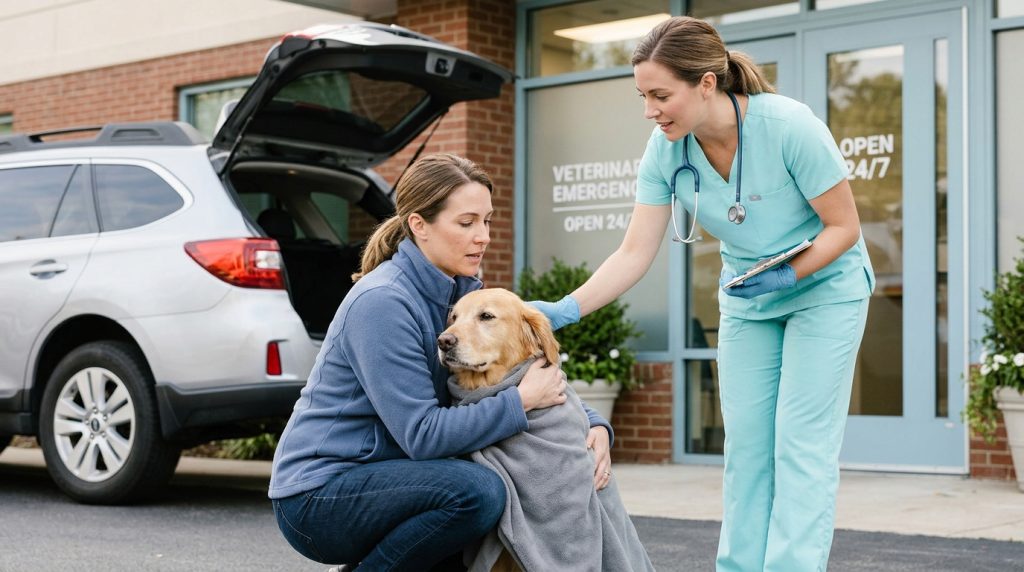
What Will Happen at the Emergency Hospital?
On arrival, the emergency team will perform a rapid primary trauma survey — airway, breathing, circulation — and begin stabilization simultaneously with the initial assessment. This may include:
- IV access and aggressive fluid resuscitation for shock
- Supplemental oxygen, including oxygen kennel support if needed
- Pain management
- Chest X-rays and abdominal ultrasound (FAST scan) to look for internal injury and hemorrhage
- Full orthopedic and neurological assessment
North Springs operates a full-service veterinary blood bank with canine and feline blood products available for critically injured trauma patients who require transfusions — a vital resource in life-threatening hemorrhage. Depending on findings, your dog may need emergency surgery, which our board-certified surgical team is equipped to perform around the clock.
When to Go to the Emergency Vet
Always, without exception, following vehicular trauma. Even if your dog appears normal, internal injuries may not be apparent for hours. Call ahead so the team can prepare for your arrival.
North Springs Veterinary Emergency & Specialty Center is equipped to handle the full spectrum of vehicular trauma — emergency stabilization, advanced imaging, an in-house blood bank, and board-certified surgery are all available 24 hours a day. Come to Come to 10520 White Diamond Pt, Colorado Springs, CO or call (719) 920-4430.
Sources and Further Reading
- Kolata RJ, Johnston DE. “Motor vehicle accidents in urban dogs: a study of 600 cases.” JAVMA. 1975;167(10):938–941.
- Streeter EM, et al. “Evaluation of vehicular trauma in dogs: 239 cases (1991–1996).” JAVMA. 2009;235(4):405–408.
- Boysen SR, et al. “Evaluation of a focused assessment with sonography for trauma protocol to detect free abdominal fluid in dogs involved in motor vehicle accidents.” JAVMA. 2004;225(8):1198–1204.
- American College of Veterinary Surgeons. “Trauma.” ACVS.org.
- Hackett TB. “Trauma management in small animals.” Veterinary Clinics of North America: Small Animal Practice. 2012;42(4):697–706.
This article is written for educational purposes and does not constitute veterinary medical advice. If your pet is experiencing a medical emergency, seek immediate veterinary care.