
Parvo in Puppies: Why This Is One Emergency You Can’t Wait On
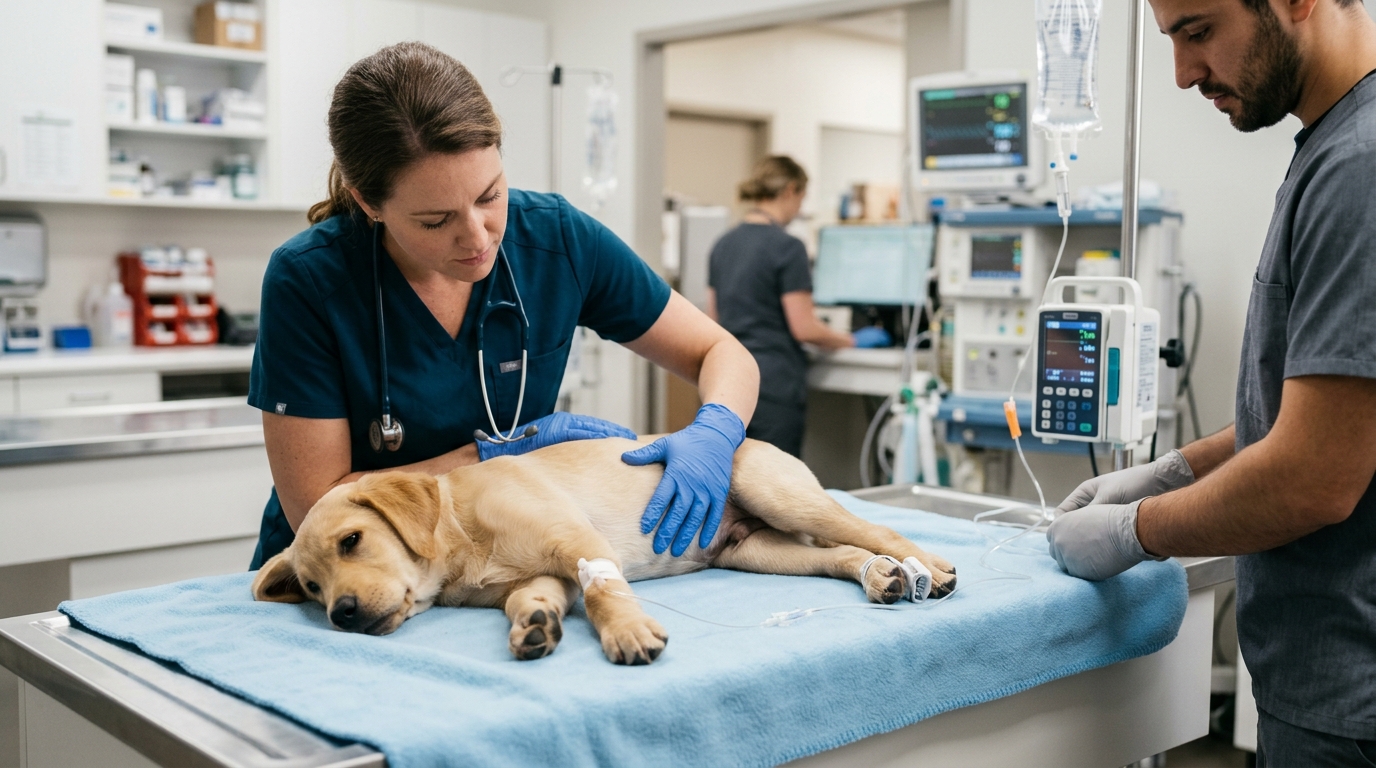
In more than two decades of emergency practice, few phone calls carry the same urgency as “my puppy has bloody diarrhea and won’t stop vomiting.” Canine parvovirus is one of the most common reasons unvaccinated or partially vaccinated puppies end up in our ER, and it’s also one of the few illnesses where the difference between a phone call made today versus tomorrow can be the difference between a full recovery and a puppy we can’t save.
What Parvovirus Actually Does
Canine parvovirus (CPV) targets the cells in a puppy’s body that divide the fastest — primarily the lining of the small intestine and the bone marrow. That’s why the disease hits so hard, so quickly. The virus strips away the intestinal lining that normally keeps bacteria contained, while simultaneously crippling the immune system’s ability to fight back. Most cases strike puppies between six weeks and six months old, the exact window when maternal antibodies are fading but full vaccination immunity hasn’t kicked in yet.
The virus is shockingly durable. It can survive in soil and on surfaces for months, sometimes over a year, and is resistant to most household cleaners. A puppy doesn’t need direct contact with a sick dog — walking through a contaminated yard or sniffing a contaminated shoe is enough.
The Signs We See Most
Parvo typically starts with lethargy and a sudden loss of appetite, followed within a day or two by repeated vomiting and profuse, often bloody, foul-smelling diarrhea. Puppies dehydrate fast — faster than owners expect — and can go from playful to critically weak within 24 hours. If your puppy is unvaccinated, only partially vaccinated, or you’re unsure of their vaccine history and you’re seeing any combination of these signs, treat it as an emergency rather than waiting to see if it passes.
Why Speed Changes the Outcome
The highest risk of death occurs 24 to 72 hours after symptoms begin, which is exactly why we push owners to come in immediately rather than trying home remedies. Puppies that survive the first three to four days of aggressive treatment typically go on to make a full recovery, often within about a week. Delay treatment, and a puppy that could have recovered with IV fluids and supportive care can deteriorate into a much more dangerous, more expensive, and less survivable case.
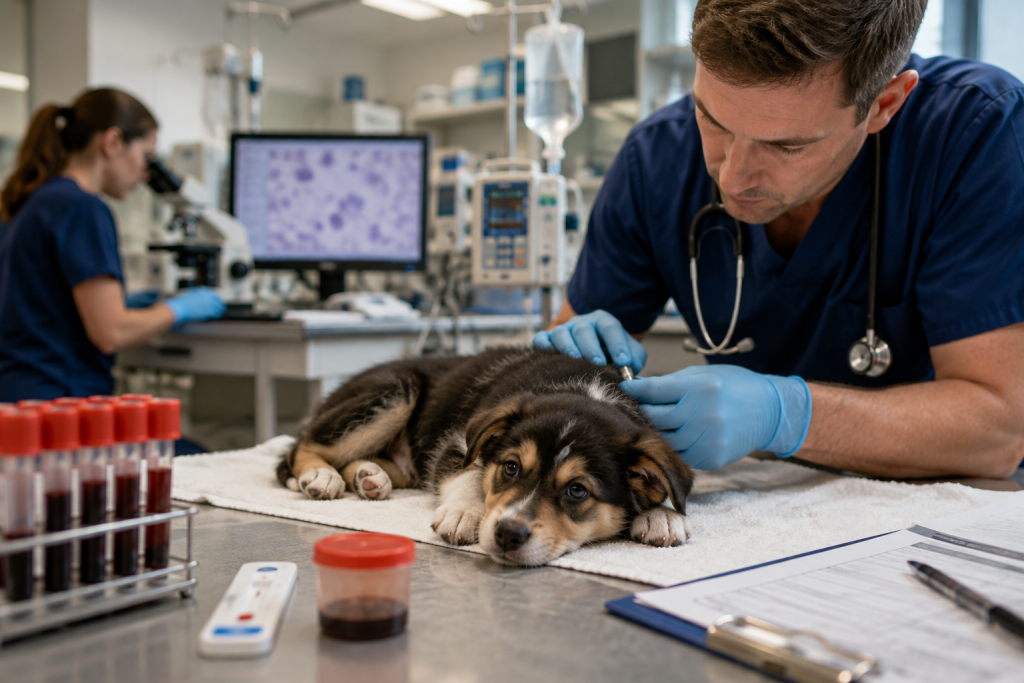
How We Diagnose and Treat It Here
We run a fecal antigen test that gives us an answer in about ten minutes, alongside bloodwork to assess how much the infection has already affected your puppy’s white blood cell count and hydration status. Because parvo is so contagious, we isolate suspected cases immediately to protect the other patients in our hospital.
Treatment is entirely supportive: aggressive IV fluids to correct dehydration, anti-nausea medication, antibiotics to prevent secondary bacterial infections from crossing the damaged intestinal wall, and close monitoring of blood sugar and electrolytes. Most puppies need several days of hospitalization. Depending on severity, treatment can run from several hundred dollars for milder outpatient-eligible cases into the thousands for puppies who need extended ICU care.
What Survival Really Looks Like
With prompt, aggressive treatment, published survival rates for hospitalized parvo puppies generally fall between 80 and 90 percent, and some studies report even higher with newer supportive protocols. Without treatment, the numbers flip — the disease is fatal in the large majority of untreated cases. That gap is the single best argument for getting to an emergency vet at the very first signs rather than waiting overnight to “see how they’re doing in the morning.”
The Best Treatment Is Prevention
A puppy vaccination series at 6, 8, and 12 weeks, with a booster between 14 and 16 weeks, is what closes the immunity gap that parvo exploits. Until that series is complete, we recommend keeping puppies away from dog parks, pet stores, and other high-traffic dog areas. If you’re ever unsure whether your puppy’s vaccine schedule is on track, ask your regular veterinarian — it’s a five-minute conversation that can prevent one of the hardest weeks a puppy owner will ever go through.
When Every Minute Counts
North Springs Veterinary Emergency & Specialty Center is open 24 hours a day, 7 days a week, 365 days a year. No appointment is ever needed for an emergency — walk in any time, day or night. Our team works alongside in-house specialists in surgery, internal medicine, cardiology, and radiology, so your pet can move seamlessly from emergency stabilization to specialty care under one roof.
North Springs Veterinary Emergency & Specialty Center
10520 White Diamond Pt, Colorado Springs, CO 80908
Phone: (719) 920-4430
northspringsvrc.com
Sources
- Canine Parvovirus Infection (Parvoviral Enteritis in Dogs) — Merck Veterinary Manual. https://www.merckvetmanual.com/digestive-system/infectious-diseases-of-the-gastrointestinal-tract-in-small-animals/canine-parvovirus-infection-parvoviral-enteritis-in-dogs
- Canine parvovirus — American Veterinary Medical Association. https://www.avma.org/resources-tools/pet-owners/petcare/canine-parvovirus
- Parvo in Dogs and Puppies: Causes, Symptoms, and Treatment — PetMD. https://www.petmd.com/dog/conditions/infectious-parasitic/parvo-in-dogs
- Canine Parvovirus — Cornell University College of Veterinary Medicine. https://www.vet.cornell.edu/departments-centers-and-institutes/baker-institute-animal-health/research-baker-institute/canine-parvovirus
- A Decade of Treatment of Canine Parvovirus in an Animal Shelter: A Retrospective Study — Animals (MDPI). https://www.ncbi.nlm.nih.gov/pmc/articles/PMC7341501/